SKIN RESULTS AND LIMITS / 03
Small human studies give GHK-Cu some support for skin
In skin creams, GHK-Cu is a small copper carrier. This page covers collagen, skin entry, and results in people.
GHK-Cu made each skin cell produce more collagen
In skin products, GHK-Cu means three protein parts holding copper. This page covers collagen, movement through skin, and small trials in people. In a dish, adding GHK-Cu raised the collagen made by human skin cells [1]. The paper writes the tiny amounts as 10⁻¹², 10⁻¹¹, and 10⁻⁹ M. M measures material dissolved in lab liquid; the first amount is smallest and the last largest, but neither gives you a cream amount. Cell numbers held steady, so the rise came from greater output by each cell [1].
Reviews often cite this collagen finding [1][3]. Free GHK, without copper, did not start the same repair response [1]. The very small lab amount drew interest [1]. Yet putting GHK-Cu into a dish is much easier than moving it through living skin. This test doesn't show what change a cream could make for you.
GHK is also one small part of type I collagen. Old collagen can release that part as it breaks down [3][6]. Lab teams think the freed part may call nearby cells to repair tissue. GHK-Cu on skin may add to that call, but large trials in people have not proved the idea.
GHK-Cu also changed other parts that support skin
Collagen was not the only skin support in these tests. GHK-Cu helped cells make decorin, a protein that lines up collagen fibers [3]. Those cells raised two gel-like materials around them. Decorin can also guide how scar tissue forms [3]. None of these cell results proves that your skin will look different.
Skin gets some of its spring from the protein elastin. In one lab test, tiny fat-like bubbles carried GHK-Cu into skin cells. The treatment cut the work of an elastin-breaking part by 48.9% [13]. At 100 nanometers wide, those bubbles were too small for the eye to see. Treatment did not harm the cells, and cells also use copper when binding collagen and elastin strands [6].
GHK-Cu crossed the outer skin slowly in a lab test
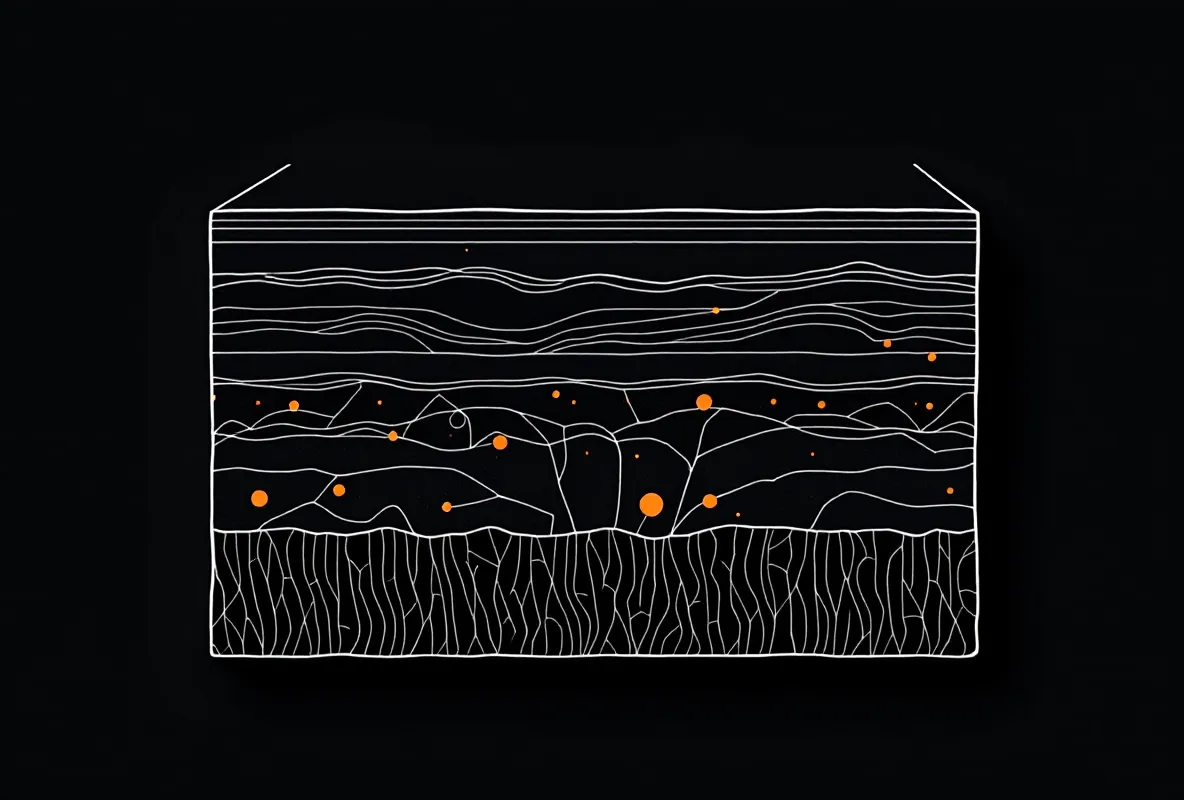
By itself, GHK-Cu moves through skin poorly [6]. One test used human skin to see how fast copper crossed the outer layer. The printed rate used a 10 with raised figures, meaning the movement was slow. After 48 hours, some copper had crossed, while the skin kept about 97 micrograms on each square centimeter [5]. The test did not show that enough reached living skin to change how it looked.
Lab teams have tried fat-like bubbles to improve that poor entry. Two kinds of bubbles, with different electrical charges, held different shares of the test amount. The paper doesn't show which kind would work better for you. Both stayed sound for 4 weeks at room temperature [13]. Other work added a fat-like tail to GHK or used very small needles. These are lab methods, not directions for home use [6].
Small human trials found firmer skin and softer lines
One review covered lab work and studies in people, finding more collagen in 70% of women given GHK-Cu. Separate studies found rises in 50% with vitamin C and 40% with retinoic acid, which is related to vitamin A and put on skin [3]. Other cream and serum trials had about 20 to 71 people. Reports described added firmness and density, along with shallower fine lines [3]. The small size makes these results less sure than a large trial.
A 2025 review said GHK may help wrinkles, but it stressed poor movement through skin [15]. A 2024 study used old scar-forming cells, not whole people. GHK made those cells act less like cells that build stiff scars [16]. The cell result offers a possible reason for the skin findings, but adds no human trial.
Harsh acids or strong vitamin C can pull GHK-Cu apart [6]. A sound mix has a blue-violet color. Green or brown may mean the copper-bound form has changed [6]. If you're weighing a product claim, the copper peptide benefits page keeps human findings apart from lab work.